
Flooring in a high-traffic commercial environment takes an enormous beating. Forklifts, foot traffic, heavy machinery, spills, and constant cleaning cycles — all of these forces combine to wear down conventional flooring faster than most business owners anticipate. The result is a cycle of costly repairs, safety hazards, and operational disruptions that few companies can afford to ignore.
Contents
- What Are Epoxy Floor Coatings and How Do They Work?
- Why Are High-Traffic Commercial Areas the Ideal Setting for Epoxy Coatings?
- What Does the Epoxy Floor Installation Process Look Like?
- Which Commercial Industries in Florida Benefit Most from Epoxy Flooring?
- How Should Florida Business Owners Evaluate Epoxy Flooring Contractors?
- Making the Right Investment in Your Commercial Floor
Florida’s commercial sector has increasingly turned to a proven solution: Epoxy Floor Coatings Florida professionals install across warehouses, retail spaces, hospitals, restaurants, and industrial facilities throughout the state. Epoxy doesn’t just improve how a floor looks. It fundamentally changes how the surface performs over time, offering a level of durability, chemical resistance, and low maintenance that most traditional flooring options simply cannot match.
This article explores what epoxy floor coatings are, why they work so well in high-traffic commercial environments, what the installation process looks like, and what Florida business owners should know before making a decision.
What Are Epoxy Floor Coatings and How Do They Work?
Epoxy floor coatings are made by combining two components: a resin and a hardener. When these two substances are mixed together, a chemical reaction occurs that produces a rigid, plastic-like material that bonds tightly to concrete surfaces. The result is a seamless, non-porous coating that becomes part of the floor itself rather than simply sitting on top of it.
This bonding process is what gives epoxy its legendary strength. Unlike paint or vinyl, epoxy cannot be easily peeled, scraped, or cracked under normal commercial use. Once cured, the surface is exceptionally hard, resistant to impact, and capable of withstanding significant mechanical stress — all qualities that matter greatly in busy commercial environments.
There are several types of epoxy systems, each suited to different commercial needs. Water-based epoxy is commonly used in light commercial spaces where aesthetics matter. Solvent-based epoxy offers deeper penetration and higher durability for industrial settings. 100% solid epoxy is the thickest and most durable option, making it ideal for heavy-duty environments like manufacturing plants and loading docks.
Why Are High-Traffic Commercial Areas the Ideal Setting for Epoxy Coatings?
High-traffic floors face unique challenges. They need to hold up under constant wear without cracking, staining, or becoming a safety liability. Epoxy coatings address all of these concerns in a single system.
The surface created by epoxy is resistant to abrasions, which means foot traffic and wheeled equipment will not gradually grind it down the way they would bare concrete or vinyl tile. Epoxy is also non-porous, so spills from oils, chemicals, cleaning agents, or food products cannot penetrate the surface and cause long-term damage. Cleanup becomes straightforward, which matters significantly in industries like food service, healthcare, and automotive maintenance.
In Florida specifically, humidity and temperature fluctuations create additional stress on flooring materials. Concrete floors in the state are prone to moisture-related problems, including efflorescence and surface degradation. A properly installed epoxy system acts as a barrier against moisture vapor, protecting the underlying concrete from the inside out. This is especially valuable in coastal and humid inland areas where moisture management is a constant concern.
Safety is another compelling reason commercial operators in Florida choose epoxy. Anti-slip additives such as aluminum oxide or silica sand can be incorporated into the topcoat, creating a textured surface that reduces the risk of slip-and-fall incidents — a major liability concern in any commercial setting.
What Does the Epoxy Floor Installation Process Look Like?
The quality of an epoxy floor depends heavily on the preparation that happens before the coating is ever applied. Surface preparation is widely regarded by professionals as the most critical step in the process.
Concrete floors must be thoroughly cleaned, degreased, and profiled before epoxy can bond properly. Profiling — often done through diamond grinding or shot blasting — creates a slightly rough surface texture that allows the epoxy to adhere at a molecular level. Any cracks, divots, or damaged areas in the concrete are repaired during this phase. Skipping or rushing surface preparation is the most common cause of epoxy delamination and failure.
Once the concrete is prepared, a primer coat is applied to penetrate the surface and create a strong foundation for subsequent layers. This is followed by the base coat, which carries the main color and build of the system. Depending on the application, additional broadcast layers containing colored flakes, quartz aggregate, or metallic pigments may be added for both aesthetic and functional purposes.
Finally, a clear topcoat is applied to seal the system and provide the final level of protection. The topcoat can be formulated with varying degrees of gloss, texture, and chemical resistance depending on the specific needs of the facility. Full cure times vary by product and environmental conditions, though most systems allow for light foot traffic within a day and full operational use within several days.
Which Commercial Industries in Florida Benefit Most from Epoxy Flooring?
Epoxy floor coatings are used across a wide range of Florida industries, and the versatility of the system is one of its greatest strengths.
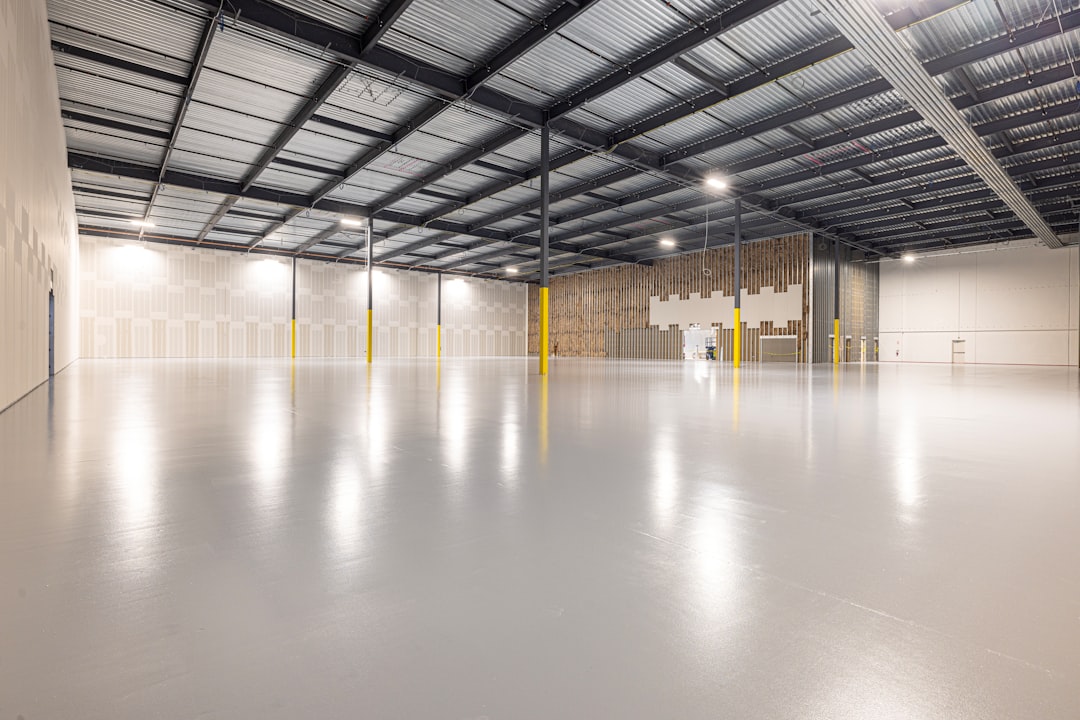
Warehouses and distribution centers rely on epoxy to mark traffic lanes, protect floors from pallet jack damage, and maintain a clean environment that satisfies operational and regulatory standards. The reflective surface of polished epoxy can also improve ambient lighting in large open spaces, reducing the need for additional lighting fixtures.
Healthcare facilities in Florida use epoxy because its seamless surface eliminates grout lines and crevices where bacteria and pathogens can accumulate. The hygienic properties of properly coated epoxy floors align well with the strict cleanliness standards required in hospitals, clinics, and laboratories.
Retail showrooms, auto dealerships, and fitness centers use epoxy for a combination of aesthetic and practical reasons. The wide variety of available colors, finishes, and decorative effects means that flooring can be customized to reinforce a brand identity or create a specific atmosphere. Meanwhile, the durability of the surface keeps maintenance costs low even in busy, customer-facing spaces.
Restaurants and commercial kitchens benefit from epoxy’s resistance to heat, grease, and cleaning chemicals. A slip-resistant topcoat keeps kitchen staff safer, while the non-porous surface helps facilities meet health inspection standards.
How Should Florida Business Owners Evaluate Epoxy Flooring Contractors?
Choosing the right installer is just as important as choosing the right epoxy system. An experienced contractor will begin with a thorough assessment of the existing concrete, checking for moisture levels, existing coatings, structural damage, and any site-specific factors that could affect the installation.
Ask potential contractors about their surface preparation methods. A reputable professional will use mechanical grinding or shot blasting rather than acid etching alone, as acid etching does not provide the surface profile required for long-term adhesion. Request information about the specific products being used, including their chemical composition, cure times, and performance ratings.
References from previous commercial projects in Florida are particularly valuable, as local professionals will understand the state’s climate conditions and how to account for them during installation. A warranty on both materials and labor is a reasonable expectation for any quality commercial installation.
Making the Right Investment in Your Commercial Floor
Epoxy floor coatings represent a long-term investment rather than a short-term fix. When installed correctly by experienced professionals using high-quality materials, a commercial epoxy system can remain functional and visually appealing for many years, even under demanding daily use.
For Florida business owners, the combination of climate resilience, safety performance, low maintenance requirements, and aesthetic flexibility makes epoxy one of the most practical flooring choices available. The upfront investment pays dividends over time through reduced maintenance costs, fewer repairs, and a consistently professional appearance that reflects well on the business.
Before beginning any flooring project, consult with a qualified epoxy flooring professional who can assess your specific facility, recommend the appropriate system, and provide a clear timeline and scope of work. The right contractor will treat your flooring as an infrastructure investment — because that is exactly what it is.
The Short Version
- Epoxy floor coatings are made by combining a resin and a hardener, resulting in a rigid material that bonds tightly to concrete surfaces.
- Once cured, epoxy surfaces are exceptionally hard, resistant to impact, and capable of withstanding significant mechanical stress, making them ideal for high-traffic commercial environments.
- Epoxy coatings create a non-porous surface that prevents spills from penetrating and causing long-term damage, making cleanup easier in industries like food service and healthcare.
- Proper surface preparation is critical for successful epoxy installation, as it ensures the epoxy bonds properly and prevents delamination.
- In Florida, epoxy flooring benefits various industries such as warehouses and healthcare facilities due to its durability and ability to meet operational and regulatory standards.




Leave a Reply